

In 2026, luxury homeowners are redefining what it means to live in style. The focus has shifted beyond mere aesthetics to include sustainability, performance, and operational efficiency. Among the most sought-after attributes in modern residences are energy efficient homes, designed to minimize environmental impact while maximizing comfort and long-term savings.
At Winton & Associates Quality Built, Luxury Designed, energy efficiency is not an afterthought—it is a cornerstone of efficient luxury construction. By integrating smart planning, high-performance systems, and sustainable design strategies, our homes deliver exceptional value, both in lifestyle and investment.
The Rise of sustainable home design
Sustainability is no longer a trend—it is an expectation. Homeowners are seeking residences that reduce environmental footprint without compromising luxury. Sustainable home design focuses on resource efficiency, long-term durability, and environmentally conscious choices.
Key sustainable strategies include:
- Selecting locally sourced and renewable materials
- Designing for optimal daylighting and passive heating/cooling
- Incorporating water-saving plumbing and fixtures
- Prioritizing recyclability and low-impact finishes
These elements not only preserve the environment but also enhance comfort and reduce utility costs.
Incorporating energy saving home features
Modern high-end homes leverage technology and design to maximize efficiency. Energy saving home features ensure that residents enjoy luxurious comfort while consuming less energy.
Common energy-saving features include:
- Advanced insulation and high-performance glazing
- LED lighting systems with automated controls
- Solar panels or photovoltaic roof systems
- Zoned HVAC systems for precise temperature control
By combining these elements, homeowners can lower energy consumption without sacrificing style or functionality.
Building high performance homes for the future
High-end residences are increasingly expected to perform beyond standard construction benchmarks. High performance homes focus on optimizing structural integrity, thermal efficiency, and operational reliability.
Critical components of high-performance design include:
- Airtight construction with quality sealing and vapor barriers
- Efficient mechanical systems with heat recovery
- Smart ventilation to maintain indoor air quality
- Durable materials that maintain performance over decades
These homes not only provide superior comfort but also long-term peace of mind.
Integrating smart systems for efficiency and control
Smart home technology is a natural complement to energy efficiency. Smart systems allow homeowners to monitor and optimize energy usage while enhancing convenience.
Examples of smart features include:
- Automated lighting and shading for optimal daylighting
- Intelligent thermostats that adapt to occupancy patterns
- Energy monitoring apps that track usage in real time
- Smart water and irrigation systems to minimize waste
Integration of these systems ensures that high-end homes operate at peak efficiency with minimal effort.
Advantages of efficient luxury construction
Combining luxury with energy efficiency requires intentional planning and construction. Efficient luxury construction ensures that design, materials, and technology work together seamlessly to achieve sustainability goals.
Benefits include:
- Reduced operational costs and energy bills
- Lower carbon footprint without compromising aesthetics
- Enhanced comfort and indoor air quality
- Long-term durability and reduced maintenance
These advantages make energy-conscious luxury homes a smart investment for modern living.
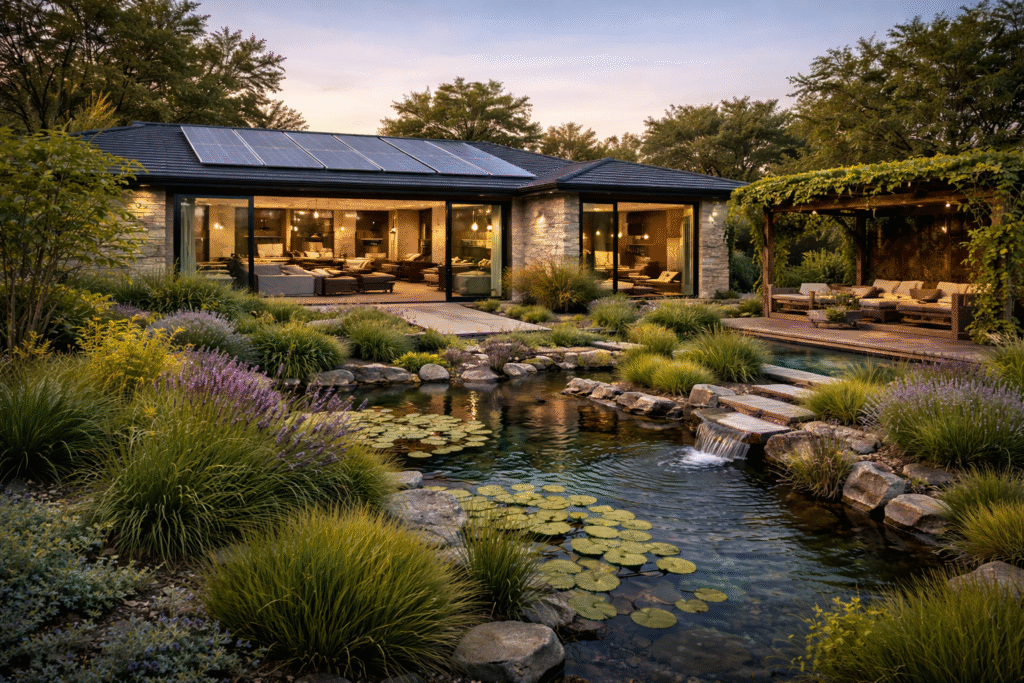
Designing With green home design principles
The most effective energy-efficient homes incorporate green home design principles from the ground up. This holistic approach considers site orientation, material selection, and system integration.
Key green strategies include:
- South-facing windows and thermal mass for passive solar heating
- Rainwater harvesting and greywater recycling systems
- Landscaping designed to reduce heat gain and water use
- Low-emission paints, finishes, and adhesives
Green design principles ensure that homes are both beautiful and responsible, supporting a sustainable lifestyle.
Practical Benefits of Energy Efficiency
Beyond environmental responsibility, energy-efficient features offer tangible lifestyle advantages.
Homeowners benefit from:
- Consistent indoor temperatures year-round
- Reduced dependency on fossil fuels and external energy sources
- Enhanced resale value due to long-term operational savings
- Increased comfort with quieter mechanical systems and improved insulation
These benefits make energy-conscious design a hallmark of contemporary luxury.
Strategic Layouts for Efficiency
Energy-efficient homes are also about intelligent architecture. Layout, orientation, and spatial planning play a key role in maximizing performance.
Smart strategies include:
- Placing living spaces on the sunniest side for natural warmth and light
- Zoning rooms based on usage patterns to optimize HVAC performance
- Using open layouts strategically to enhance airflow and daylight penetration
- Incorporating exterior shading, overhangs, and landscaping to minimize heat gain
Every design choice contributes to energy savings and long-term comfort.
Conclusion
Energy-efficient design is no longer a secondary consideration in luxury homes—it is essential to creating residences that are beautiful, functional, and responsible. By thoughtfully integrating sustainable strategies, high-performance systems, and smart technology, modern custom homes provide both elevated comfort and reduced environmental impact. A well-designed, energy-conscious luxury home delivers not only lasting value but also a lifestyle that aligns with the future of responsible living.