

In today’s residential design landscape, homeowners are no longer satisfied with simply spacious or beautiful interiors. They want luxury homes that are not only visually stunning but also intelligently organized to support both communal living and personal retreat. Achieving this balance requires thoughtful architectural planning, careful zoning, and a deep understanding of how families interact with their living environment.
At Winton & Associates Quality Built, Luxury Designed, we believe that exceptional homes combine openness with intimacy, creating spaces that feel expansive without sacrificing comfort or privacy. From flexible floor plans to deliberate room placement, every design decision contributes to a home that adapts gracefully to the way people live today.
Why Privacy Matters in Luxury Living
Even in large homes, privacy is a critical aspect of comfort and well-being. Homeowners increasingly seek private spaces—areas designed for personal reflection, focused work, or quiet retreat—while still enjoying the benefits of open, connected living.
Key reasons privacy is essential include:
- Reducing stress and providing a sanctuary within the home
- Supporting work-from-home or study routines
- Allowing multiple family members to pursue different activities simultaneously
- Maintaining balance between social areas and individual retreat
The right layout ensures that private spaces feel natural rather than isolated.
Creating Harmony With luxury home flow
In high-end residential design, luxury home flow is the invisible thread that connects rooms while guiding movement. Open living spaces are carefully integrated with circulation paths that allow residents and guests to navigate effortlessly.
Elements that contribute to optimal flow include:
- Strategic placement of living, dining, and entertaining areas
- Seamless transitions between indoor and outdoor spaces
- Clear sightlines that create a sense of openness
- Thoughtful buffering of private zones from high-traffic areas
A home that flows intuitively feels larger, brighter, and more inviting.
Designing With modern custom floor plans
The backbone of any well-organized home is the floor plan. Modern custom floor plans focus on balancing expansive communal areas with secluded retreats, ensuring that all spaces serve their intended purpose efficiently.
Design strategies include:
- Open-concept kitchens and living rooms for social interaction
- Bedrooms positioned to maximize privacy and minimize noise
- Flexible multipurpose rooms for guests, media, or home offices
- Strategic hallway and foyer placement to manage circulation
By integrating these principles, a custom home becomes both functional and elegant.
The Role of high-end home layouts
High-end home layouts emphasize proportion, scale, and zoning. Every square foot is deliberately assigned to optimize comfort, aesthetics, and usability. In luxury homes, layout design also considers long-term adaptability, ensuring the home can evolve with the family.
Key aspects include:
- Proper room sizing relative to use and occupancy
- Separation of entertaining areas from restful zones
- Efficient placement of bathrooms, storage, and utility areas
- Alignment with architectural style and natural lighting
High-end layouts balance grandeur with practical livability.
Advantages of a custom home Approach
Unlike production or spec homes, a custom home is designed specifically for the owners’ lifestyle. This approach allows for intentional zoning, material selection, and room placement that reflect both individual and family needs.
Benefits of a custom approach include:
- Tailored bedroom and bathroom placement
- Spaces designed for hobbies, entertainment, or work
- Integration of outdoor living with indoor comfort
- Adaptability for future expansion or lifestyle changes
The result is a home that feels inherently personal, functional, and luxurious.
Balancing Private and Communal Areas
Creating a harmonious balance between shared and private spaces is a hallmark of thoughtful design. Luxury homes are no longer just large—they are intelligently zoned.
Strategies for balance include:
- Locating bedrooms and offices away from primary entertainment areas
- Using transitional spaces such as hallways or libraries as buffers
- Designing secondary living areas for children or guests
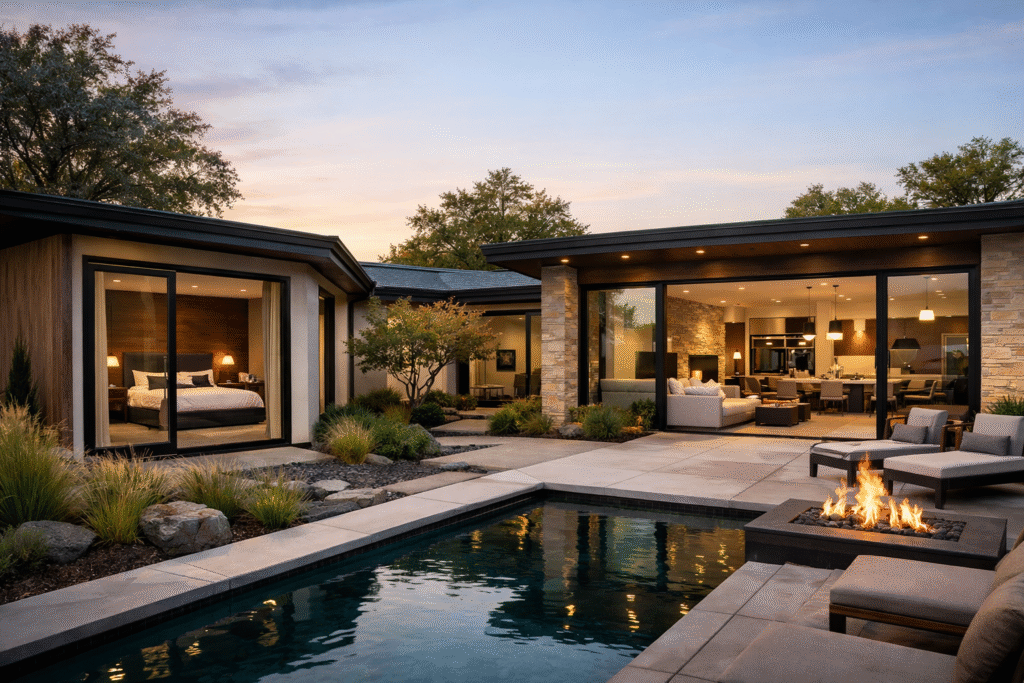
- Incorporating outdoor retreats accessible from both private and public rooms
This approach ensures that residents enjoy both interaction and solitude as needed.
Integrating Flexibility Into Layouts
Modern families require homes that adapt over time. Flexible design allows spaces to serve multiple purposes without compromising aesthetics or flow.
Examples include:
- Bonus rooms that can function as a gym, office, or guest suite
- Convertible walls or partitions for temporary privacy
- Dual-purpose common areas that host events or everyday life
- Adjustable lighting and spatial elements to redefine room ambiance
Flexibility ensures the home remains relevant as the family grows or lifestyle needs change.
Technology and Flow
High-end luxury homes often integrate smart technology to enhance both privacy and flow. This includes automated lighting, temperature control, and sound management to create environments tailored to individual needs.
Applications may include:
- Zoned heating and cooling for comfort in private or communal areas
- Smart shades or blinds to control light and maintain privacy
- Audio systems that can be localized or shared across zones
- Security systems integrated with layout design for convenience
Technology complements architectural planning to elevate everyday living.
Conclusion
Balancing privacy and open living is at the heart of modern custom home design. Through thoughtful layouts, strategic zoning, and flexible floor plans, homeowners can enjoy both connected communal areas and personal retreats. The result is a home that feels intuitive, functional, and timeless—providing comfort, luxury, and harmony for every stage of life.