

As families enter a new year, priorities often shift toward long-term comfort, adaptability, and intentional living. In January 2026, more homeowners are looking beyond immediate needs and focusing on how their homes can evolve alongside their families. Thoughtfully designed living spaces are no longer static environments; they are dynamic areas that support growth, change, and connection over time.
At Winton & Associates Quality Built, Luxury Designed, we believe a truly exceptional home anticipates the future. Designing a luxury home that grows with your family requires foresight, flexibility, and a deep understanding of how people live at different life stages. From early childhood to multigenerational living, the right design approach ensures your home remains beautiful, functional, and relevant for decades.
Why Homes Must Be Designed for Change
Families are constantly evolving. Children grow, work-from-home needs change, and aging parents may eventually move in. A home designed only for the present can quickly feel limiting, while a future-focused design provides freedom and longevity.
A home that grows with your family offers:
- Long-term comfort without frequent renovations
- Spaces that adapt to changing routines
- Improved resale value
- Emotional continuity and stability
Forward-thinking design balances elegance with practicality, allowing homeowners to enjoy luxury without sacrificing flexibility.
The Foundation of Timeless luxury home design
True luxury home design goes beyond finishes and square footage. It lies in how well a home supports daily life while maintaining sophistication. Timeless luxury prioritizes proportion, flow, and adaptability.
Key characteristics include:
- Neutral, enduring material palettes
- High-quality construction that withstands time
- Spaces designed for multiple uses
- Architectural flexibility rather than rigid room definitions
Luxury homes that stand the test of time are those that feel intentional, not trend-driven.
Planning Ahead With proof home design
Designing for the future begins with proof home design, an approach that anticipates life changes before they happen. This strategy allows homeowners to enjoy their space today while knowing it will remain functional tomorrow.
Examples of future-ready planning include:
- Rooms that can shift from nursery to office to guest room
- Bathrooms designed to accommodate aging in place
- Structural support for future elevators or lifts
- Technology infrastructure that can evolve over time
Proof-based design reduces the need for disruptive renovations and ensures the home adapts seamlessly to new phases of life.
Flexible home layouts That Adapt Over Time
Well-planned home layouts are essential for a house that evolves with its occupants. Rather than fixed-purpose rooms, modern luxury homes embrace adaptable zones.
Design strategies include:
- Open-concept areas that can be reconfigured as needs change
- Sliding doors or movable partitions for privacy when needed
- Secondary living areas for teenagers or extended family
- Bonus rooms that serve multiple purposes across the years
A flexible layout empowers homeowners to redefine spaces without altering the home’s core structure.
Intentional home planning for Every Life Stage
Effective home planning considers how a family’s needs shift from year to year. January is often a time of reflection and goal-setting, making it the perfect moment to think long-term about how a home supports daily life.
Planning considerations may include:
- Proximity between bedrooms for young children
- Quiet zones for study or remote work
- Social areas that support family gatherings
- Private retreats for rest and independence
By aligning design decisions with long-term family goals, homeowners create spaces that feel intuitive and supportive at every stage.
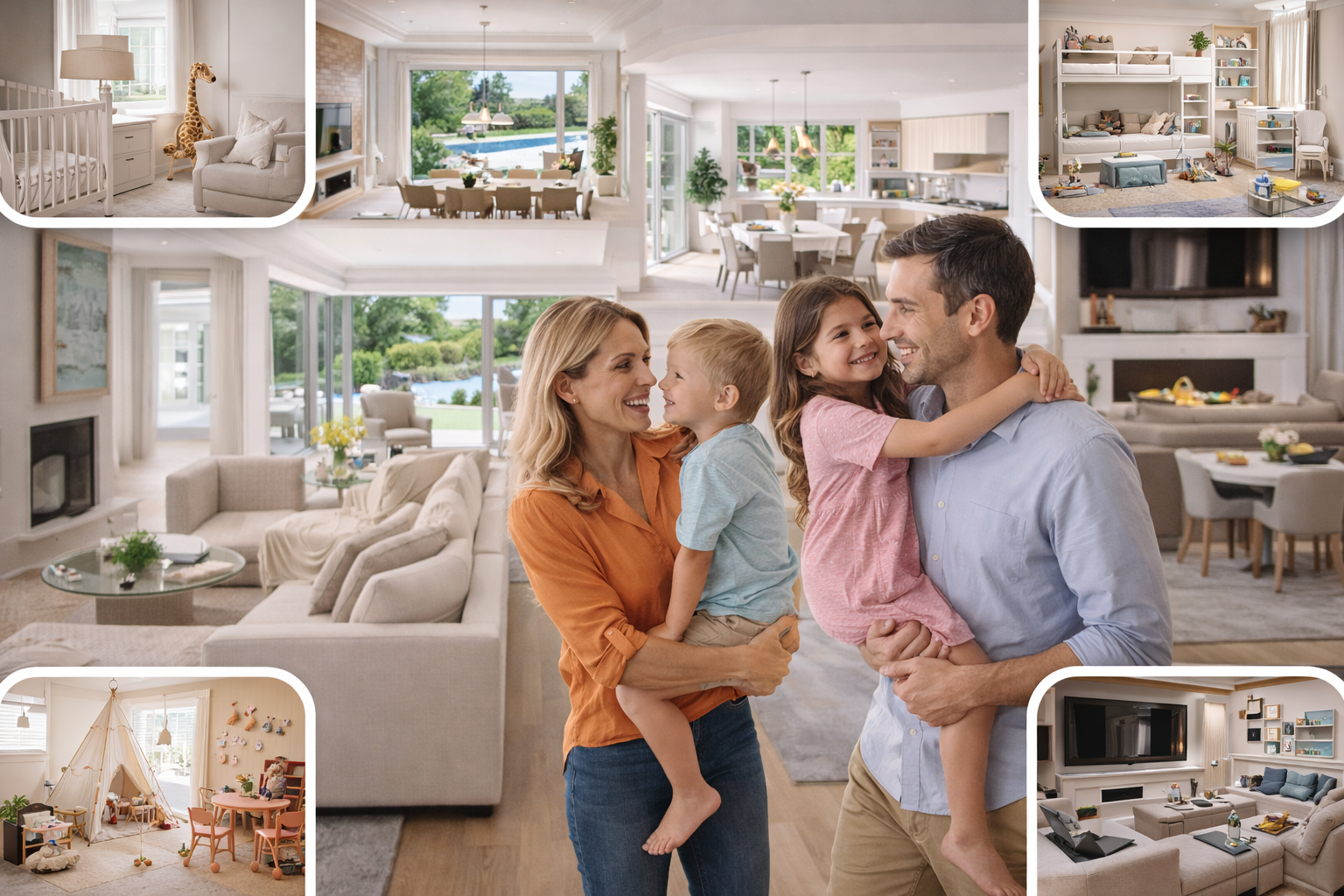
Personalized custom home design That Evolves With You
The strength of custom home design lies in personalization. A custom-built home allows families to embed flexibility directly into the architecture, ensuring it remains aligned with their lifestyle as it evolves.
Custom design advantages include:
- Tailored room sizes based on real-life use
- Built-in storage that adjusts to changing needs
- Structural planning that allows for future expansion
- Architectural details that reflect personal values and routines
Customization ensures that growth never feels like a compromise—it feels like a natural progression.
Designing Multi-Functional Living Areas
Modern families rely on spaces that can serve more than one purpose. Living areas may host playtime, work, relaxation, and entertaining—all within the same day.
Features that support multi-functionality include:
- Durable yet elegant materials
- Integrated technology that adapts to different uses
- Lighting plans that shift from task-focused to ambient
- Furniture layouts that can be easily reconfigured
When spaces are designed with flexibility in mind, the home becomes a supportive partner rather than a limitation.
Supporting Multigenerational Living
As family dynamics change, many homeowners are planning for multigenerational living. Designing with this possibility in mind ensures comfort, dignity, and independence for everyone under one roof.
Thoughtful solutions include:
- Main-level bedrooms with full bathrooms
- Separate entrances or private suites
- Soundproofing between living zones
- Shared spaces that encourage connection without crowding
These design elements allow families to stay together while respecting individual needs.
Longevity Through Smart Material and Structural Choices
A home designed to grow with a family must also endure physically. Materials, systems, and construction quality all play a role in long-term success.
Important considerations:
- Flooring that withstands wear while remaining elegant
- Energy-efficient systems that adapt to usage changes
- Structural integrity that allows future modifications
- Low-maintenance finishes that age gracefully
Durability and adaptability go hand in hand in a truly future-ready home.
Conclusion
Designing a luxury home that grows with your family is an investment in both comfort and peace of mind. By prioritizing flexibility, thoughtful planning, and enduring design principles, homeowners can create spaces that adapt gracefully to life’s changes. A well-designed home supports growth without losing its sense of beauty or identity, becoming a lasting foundation for memories, milestones, and everyday living well into the future.