

Not all homes are created equal. While many houses may look impressive on the surface, the process behind their creation determines how they function, endure, and truly support the lives lived inside them. In today’s market, understanding the difference between custom and production builders is essential for anyone investing in long-term quality, comfort, and architectural integrity. At the core of this distinction lies the philosophy behind home construction itself.
At Winton & Associates Quality Built, Luxury Designed, a home is never treated as a template. It is a carefully crafted collaboration—one that prioritizes craftsmanship, intention, and the individuality of every homeowner.
Understanding the Two Building Models
Before exploring what truly sets custom builders apart, it is important to understand the fundamental difference between the two approaches.
Production builders typically:
- Build multiple homes at scale
- Use predefined floor plans with limited customization
- Prioritize speed and volume
- Standardize materials and finishes
Custom home builders, on the other hand:
- Design each home individually
- Tailor layouts, materials, and systems
- Focus on quality over quantity
- Build around the homeowner’s lifestyle and vision
While both deliver finished homes, the experience—and outcome—are profoundly different.
The Long-Term Value of benefits of custom home building
One of the most compelling reasons homeowners choose a custom builder is the enduring value created by thoughtful design and execution. The benefits of custom home building extend far beyond aesthetics.
These benefits include:
- Homes designed specifically for the owner’s daily life
- Greater structural integrity and material quality
- Improved energy efficiency and performance
- Spaces that adapt to future needs
Custom homes are investments not only in property value, but in quality of life.
Craftsmanship Backed by luxury builder expertise
True custom builders bring a depth of experience that cannot be replicated through mass production. Luxury builder expertise is rooted in years of hands-on craftsmanship, architectural understanding, and meticulous attention to detail.
This expertise is reflected in:
- Precision framing and structural systems
- Seamless integration of materials and finishes
- Problem-solving during complex builds
- Collaboration with architects, designers, and engineers
Every detail—from foundation to final trim—is executed with intention.
Design Freedom Beyond custom vs spec homes
One of the most significant distinctions lies in the level of creative freedom. The comparison of custom vs spec homes highlights how limitations can impact livability.
Spec homes are often:
- Designed for broad market appeal
- Built before a buyer is involved
- Limited in layout flexibility
- Constrained by preset material choices
Custom homes allow:
- Complete personalization of layout
- Tailored room proportions and flow
- Material selections aligned with lifestyle
- Architecture that responds to site and surroundings
This freedom results in homes that feel personal, not generic.
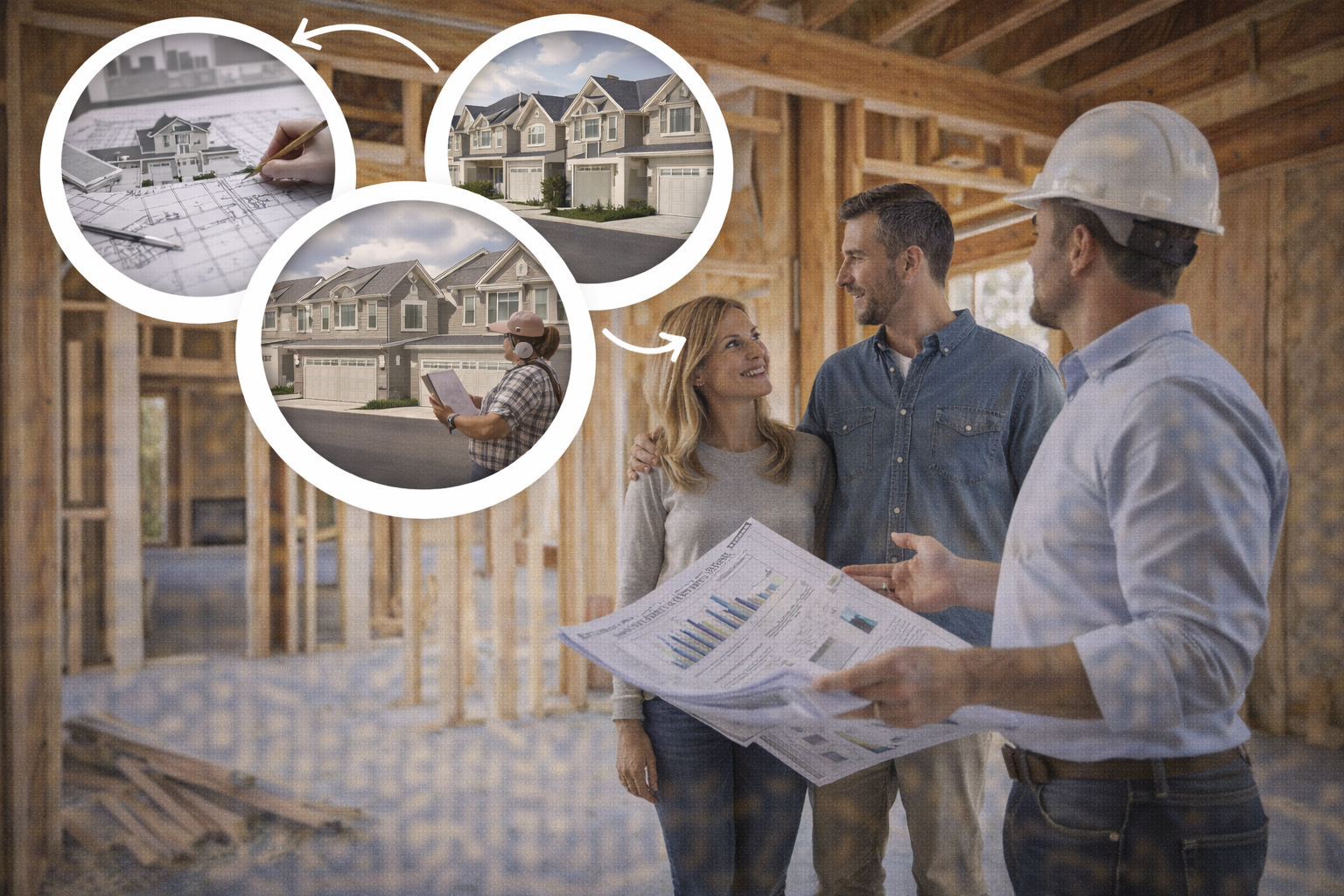
A Personalized Process When choosing a custom home builder
The building experience itself is as important as the finished home. Choosing a custom home builder means entering a collaborative relationship built on trust, communication, and transparency.
A true custom builder will:
- Listen carefully to your goals and concerns
- Guide design decisions with clarity
- Provide realistic timelines and expectations
- Remain actively involved throughout construction
This level of engagement ensures the final home reflects both vision and practicality.
Quality Control vs Speed in custom home builder vs production builder
The contrast between a custom home builder vs production builder is most evident in quality control. Production builders often follow rigid schedules that prioritize speed, sometimes at the expense of precision.
Custom builders focus on:
- Careful sequencing of construction phases
- Thorough inspections at each stage
- Adjustments when conditions require refinement
- Long-term performance over short-term delivery
This approach leads to homes that age gracefully and perform reliably over time.
Materials Matter More in Custom Homes
In luxury construction, materials are never an afterthought. Custom builders select materials based on durability, performance, and aesthetic harmony—not solely cost efficiency.
Advantages include:
- Higher-grade structural components
- Superior finishes that withstand daily use
- Materials suited to climate and environment
- Consistency throughout the home
This attention to materials directly impacts comfort, maintenance, and longevity.
Architecture Designed Around Lifestyle
Custom homes are designed from the inside out—starting with how homeowners live, work, and relax. Rather than forcing life into a predefined plan, the home evolves around daily routines.
Lifestyle-driven design considers:
- How spaces connect and flow
- Natural light and privacy balance
- Work-from-home needs
- Entertaining and family gathering areas
The result is a home that feels intuitive and effortless.
Communication and Accountability
Another defining factor is accountability. Custom builders maintain direct responsibility for each project, often limiting the number of homes built at one time to ensure quality.
This means:
- Direct access to the builder
- Faster resolution of concerns
- Clear communication throughout the process
- Pride of ownership in the finished product
This level of accountability is rarely possible in high-volume production environments.
Conclusion
A true custom home builder offers more than a finished house—they deliver a living environment shaped by craftsmanship, intention, and care. From personalized design to superior construction standards, custom homes reflect the people who live within them. When quality, longevity, and lifestyle alignment matter, the difference becomes clear: a custom-built home is not just built to last, but built to belong.