

Luxury in modern custom homes is no longer defined solely by visual beauty or square footage. In 2026, homeowners increasingly value how a space feels—and sounds. From quiet mornings to uninterrupted rest and focused workdays, acoustics play a critical role in everyday comfort. This growing awareness has placed soundproof home design at the forefront of high-end residential architecture.
At Winton & Associates Quality Built, Luxury Designed, acoustic performance is considered an essential component of refined living. Through thoughtful planning, material selection, and construction techniques, sound becomes a design element rather than an afterthought.
Why Acoustic Design Matters in Luxury Living
Noise affects more than comfort—it influences health, productivity, and emotional well-being. In custom homes, poor acoustics can undermine even the most beautiful interiors.
Common noise challenges include:
- Sound transfer between rooms
- Exterior noise from traffic or neighbors
- Echo and reverberation in open layouts
- Mechanical noise from HVAC or appliances
Luxury homes demand solutions that address these issues discreetly, without compromising aesthetics or architectural intent.
Understanding the Foundations of Acoustic Performance
Effective sound control begins long before finishes are selected. Acoustic design is most successful when integrated during the early planning and framing stages.
Key principles include:
- Controlling sound transmission between spaces
- Absorbing unwanted noise within rooms
- Isolating sound-generating systems
- Maintaining balance between openness and privacy
This strategic approach allows homes to feel expansive while still offering moments of quiet and retreat.
Structural Solutions With acoustic insulation homes
One of the most impactful elements of sound control lies behind the walls. Acoustic insulation homes rely on specialized materials designed to absorb and dampen sound waves rather than simply filling cavities.
These systems often include:
- High-density insulation in walls and ceilings
- Sound-dampening batts between floors
- Insulated interior partitions for bedrooms and offices
- Targeted insulation around media rooms
By addressing sound at its source, insulation creates a more peaceful interior environment throughout the home.
Construction Techniques That Support noise reduction construction
Beyond insulation, construction methods themselves play a vital role in limiting sound transmission. Noise reduction construction focuses on separating structural elements to prevent vibration from traveling through the building.
Common techniques include:
- Double-stud or staggered wall assemblies
- Resilient channels for drywall installation
- Floating floors in upper levels
- Isolated framing around mechanical rooms
These methods are particularly valuable in multi-level homes or properties with open-concept layouts.
Designing for Comfort With quiet home design solutions
Luxury homes must balance openness with tranquility. Quiet home design solutions address this challenge by zoning spaces according to sound sensitivity.
Design strategies often include:
- Locating bedrooms away from social areas
- Buffer zones such as closets or hallways
- Strategic placement of staircases
- Thoughtful separation of work and leisure spaces
These choices ensure that lively gatherings and peaceful retreats can coexist within the same home.
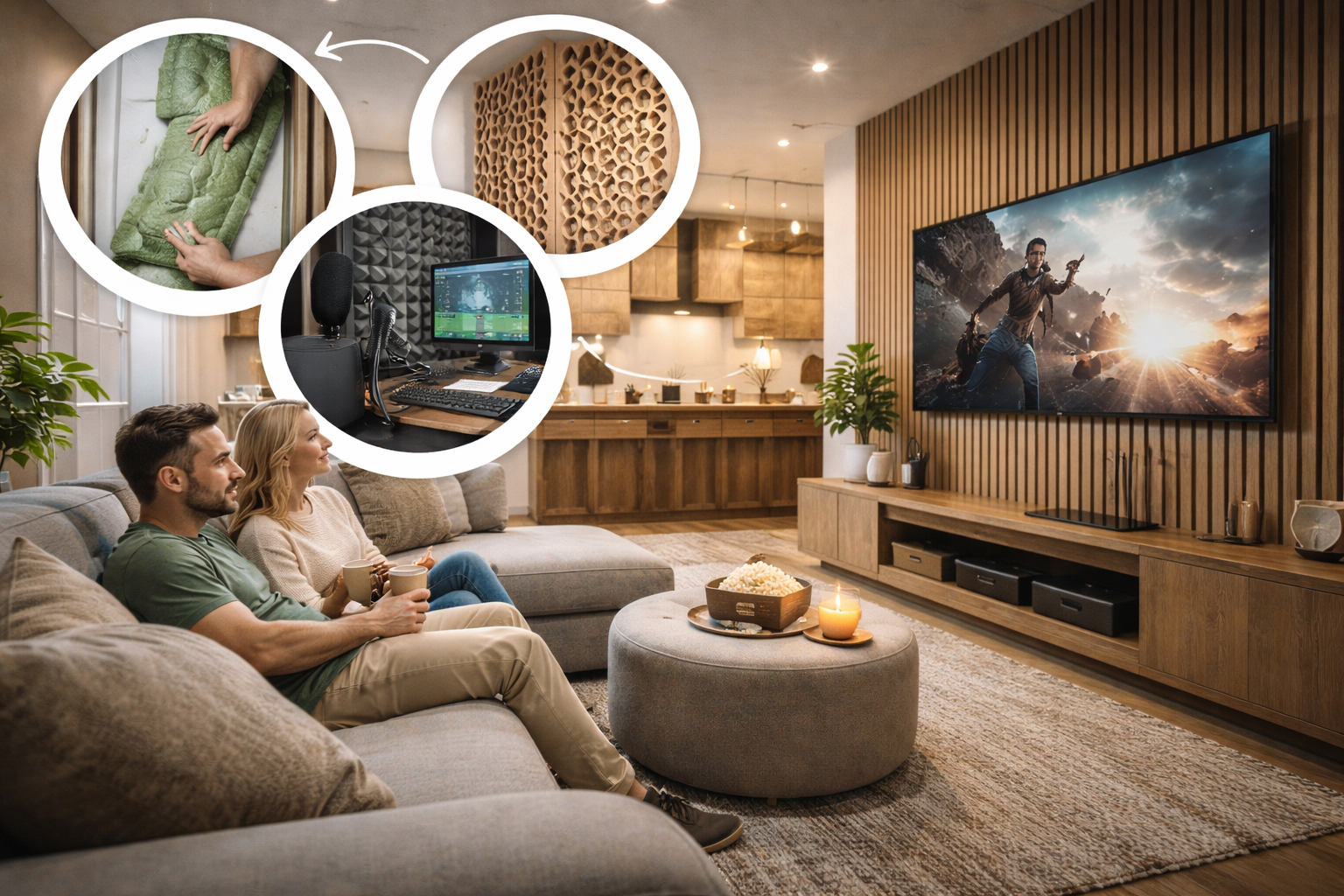
Precision Planning for sound control in luxury homes
High-end residences demand a higher level of acoustic refinement. Sound control in luxury homes often requires customized solutions tailored to lifestyle needs.
Examples include:
- Enhanced soundproofing for home theaters
- Acoustic treatments for music rooms or studios
- Noise isolation for gyms or wellness spaces
- Discreet solutions that preserve clean design lines
These specialized applications demonstrate how sound control can elevate both functionality and enjoyment.
Creating Comfort Through private living spaces
As homes become more multifunctional, the demand for private living spaces continues to grow. Whether for work, rest, or relaxation, acoustically protected areas provide essential balance within modern households.
Key spaces benefiting from acoustic design include:
- Primary bedroom suites
- Home offices and study areas
- Guest rooms
- Reading or meditation spaces
By prioritizing privacy, custom homes support mental clarity and emotional well-being.
Acoustic Considerations in Open-Concept Homes
Open layouts remain popular, but they present unique acoustic challenges. Hard surfaces, high ceilings, and expansive rooms can amplify noise if not properly managed.
Solutions often include:
- Soft materials such as rugs and upholstered furniture
- Acoustic ceiling treatments or panels
- Textured wall finishes that absorb sound
- Strategic furniture placement to reduce echo
These elements maintain openness while enhancing comfort.
The Role of Mechanical Systems in Acoustic Comfort
Even the most carefully designed home can be disrupted by mechanical noise. HVAC systems, plumbing, and appliances must be selected and installed with sound control in mind.
Best practices include:
- Locating mechanical rooms away from living areas
- Using vibration-isolating mounts
- Installing lined ductwork
- Selecting low-noise equipment
When systems operate quietly, they fade into the background of daily life.
Conclusion
Acoustic design is no longer optional in high-end custom homes—it is a defining feature of true luxury. By addressing sound at every level, from structure to layout, homeowners gain spaces that feel calm, intentional, and deeply livable. When sound is thoughtfully controlled, the home becomes not just visually stunning, but genuinely restorative—a place where silence, comfort, and privacy are part of everyday life.